
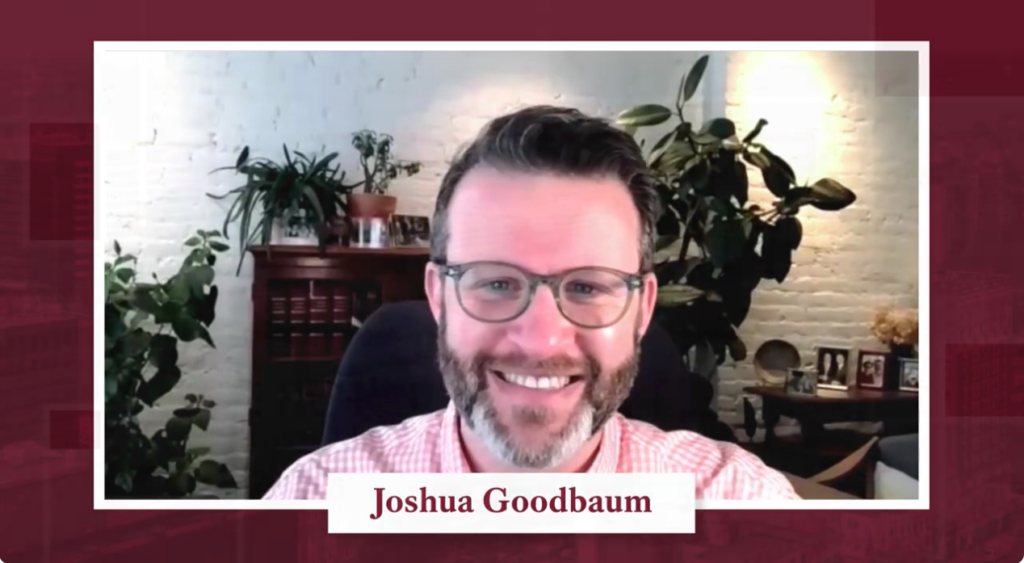

Josh Goodbaum: Hi, Amanda.
Amanda DeMatteis: Hi, Josh. What are we going to talk about today?
Goodbaum: Well, I want to talk about something that is really blowing up the internet. It is the “salami incident.” That’s what the news is calling it. Apparently an asset manager who worked for JPMorgan for more than 20 years and allegedly managed over $1 billion in client funds – that’s billion with a B – was fired over a $600 deli platter. So what happened here, and what can employees learn from this story?
DeMatteis: This really is blowing up the internet, Josh, and it’s very recent. The judgment just came down in May of 2026, and the award was from FINRA, the Financial Industry Regulatory Authority. FINRA is a nonprofit organization authorized by Congress to oversee US broker deals, registered brokers, capital acquisition portals, and similar professionals. They’re also the primary arbitration and mediation forum for resolving disputes between investors, brokerage firms, and their employees.
Brent Bodner was a 20-year JPMorgan employee who filed an arbitration complaint with FINRA. Bodner was apparently managing approximately a $1 billion book of business when he got into a little bit of hot water in 2024. He put in an expense reimbursement request for $642.50. This was for a deli platter that he claimed was going to be used at a luncheon or a meal that he was having for a client and a potential client. Just so happened to be right around the Super Bowl.
JPMorgan claimed that he violated company policy by using a company card to purchase the $642.50 deli platter and what he was really doing was having his family over to his house for a Super Bowl party. JP Morgan said “We need to hold our employees accountable. If they are submitting fraudulent expense reports, then that is a terminable offense and we should be able to take action against an employee.” And after the termination, the bank submitted to FINRA a form called a U5 that stated that Bodner was terminated “for cause,” essentially for fraud, for stealing the $642.50.
The arbitration panel found that Bodner’s U5 contained inaccurate information because Bodner had done nothing wrong. He appropriately submitted this expense. In fact, the expense was approved before he incurred it. And therefore this was not a for-cause termination.
So what did that $642.50 deli platter actually cost JPMorgan? The award was $4.25 million.
So Josh, what can Connecticut employees take away from the salami incident? Three things.
One – Employees should always be extremely careful and truthful when submitting expenses for reimbursement. According to the FINRA arbitrators, Bodner did nothing wrong here, but this seemingly simple mistake led to years of litigation. So be very careful on expense reports, and make sure they are accurate.
Two – Look at how important this contractual “for cause” protection was to Brent Bodner. Most employees are employees at will, meaning they can be terminated even without cause. The arbitrators’ award here focuses on defamation – namely, that the U5 submitted by JPMorgan stated that Bodner was terminated for cause. The arbitration panel found that to be inconsistent with the facts. If Bodner did not have cause protection, he may not have had a case at all. This is why contractual protections can be so important for employees.
Third – Bodner’s profession as an asset manager afforded him different protection than a different kind of employee might have. Circumstances matters, and that means that talking with the right employment lawyer is critical. We spend a lot of time, Josh, talking with Connecticut employees about how employment law is so fact-specific, and this is a perfect example of how valuable it is to have the right lawyer who knows the facts and can apply the law. And look at the outcome that Brett Bodner received from doing that.
Goodbaum: What a story, Amanda. We love when employment law makes its way into the news and blows up the internet, and fortunately there are a lot that employees can learn from this experience with JPMorgan. So thank you all for watching, and thank you for the advice, Amanda. We’ll see you next time.