
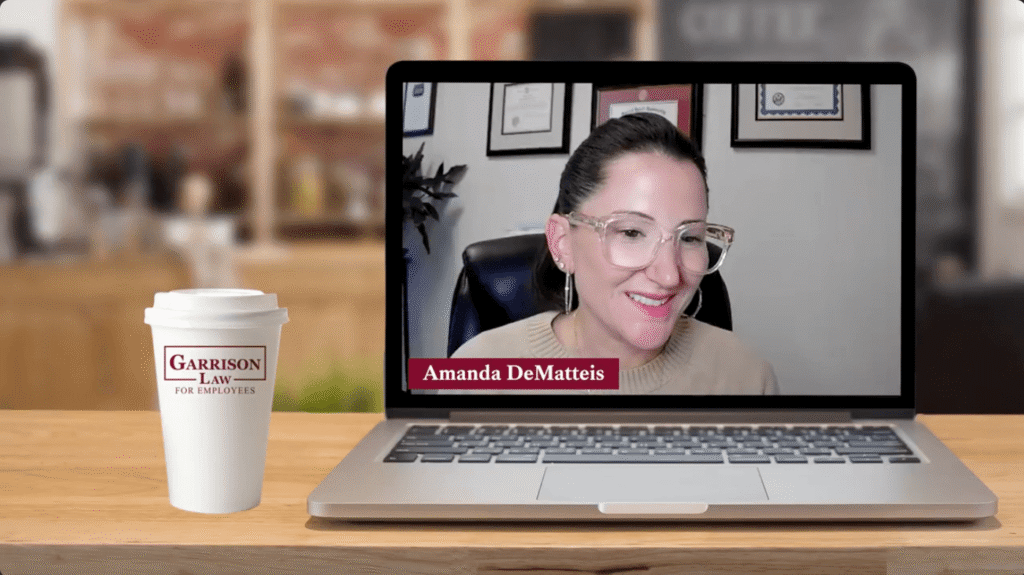

Amanda DeMatteis: Hi, Josh.
Josh Goodbaum: Hi, Amanda. What are we talking about today?
DeMatteis: I thought we would talk about the value of jury service. And some of our viewers might be saying, “Jury service? No. We get this dreaded letter in the mail that says we have to go and appear for jury duty.” And folks just simply don’t want to do that.
But this is a really important service and something that is critical, not only in civil trials, but also in settling civil cases, just like the employment law cases that we talk so much about in our videos.
Remember: there’s really only two ways to be an active participant in our democracy, and that is by voting and by serving on a jury. So, I was hoping, Josh, you could speak with our jurors – excuse me, with our viewers – about the value of their jury service.
Goodbaum: I love that Freudian slip, Amanda, because if you are a citizen watching this video, you are likely to be called for jury duty at some point, and to have the opportunity – some would say the privilege – of serving on a jury. Why is it a privilege? Because you get to bring the community’s perspective to a dispute and help to resolve that dispute.
As you said, Amanda, the way that employment disputes resolve and other kinds of civil (that is, noncriminal) disputes resolve is either by settlement or with a verdict from a jury. The settlement is always driven by the idea that, if it doesn’t settle, there is going to be a verdict from a jury. I can’t tell you how many times we settle cases as people say “on the courthouse steps” or during the jury selection process. Why is that? Because that’s when it becomes really real for the parties. It’s when they get to fish or cut bait, right? They get to say, “Yeah, I really want a jury to decide this case. I want to put this case in the hands of strangers,” or “I want to control my own destiny and accept what is offered by the other side, or pay what the other side is demanding.”
As a juror, you are helping each side to a dispute to protect their constitutional rights. We have rights under the Federal Constitution and the Connecticut Constitution to trial by jury, to have our disputes resolved by a jury of our peers. And it is only because our peers are willing to serve on a jury that we are able to have those rights vindicated. So, you are participating in democracy, you are bringing the community’s perspective to bear in the resolution of a dispute, you’re allowing that dispute to be resolved, and you are protecting everyone’s constitutional rights.
I would just say, lastly, that if you have a reluctance or a hesitation about serving on a jury, just think that if something happened to you and you needed to file a claim, or you were accused of doing something wrong and you were a defendant in a lawsuit, wouldn’t you want fair-minded, responsible, reasonable people from your community to come and serve on a jury to help resolve that dispute? I think you would. And that’s why it’s so important that you answer that letter, you show up for jury service, and you participate in this wonderful civic obligation that we all have.
DeMatteis: Thank you so much, Josh. That was so useful. Thank you for watching, and good luck serving on that jury. We’ll see you next time.