





Jun 17 2026
Amanda DeMatteis: Hi, Josh.
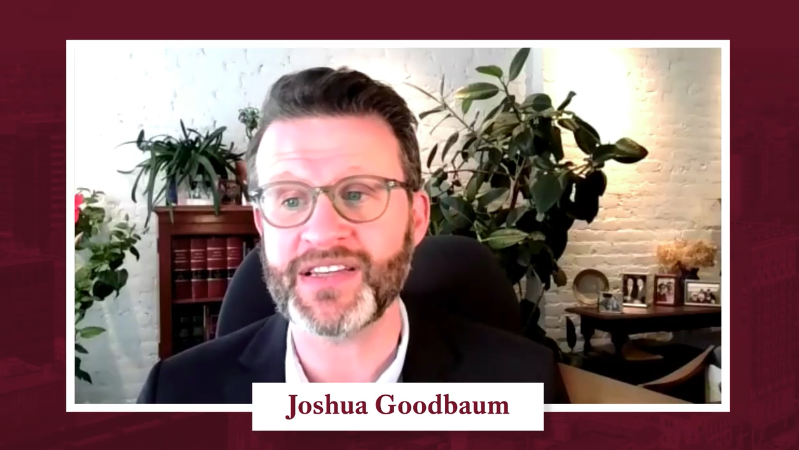
Josh Goodbaum: Hi, Amanda. What are we talking about today?
DeMatteis: I want to talk about Scott Pelley. As many of you know, he was the longtime host of 60 Minutes and his employer CBS – the network that airs 60 Minutes – recently terminated him. Tell us what we need to know and what employees and employment lawyers can learn from this situation.
Goodbaum: Scott Pelley was at CBS News for 37 years, including a number of years as the anchor of the CBS Evening News, which is a very prominent position in journalism and TV in this country.
In early June 2026, Pelley goes to a meeting where the new executive producer of 60 Minutes is announced. Pelley looks around and sees that he’s the most senior person in the room, the only correspondent, the only person among the faces that we know from 60 Minutes. And he’s still reeling from the recent termination just the previous week of the last executive producer of 60 Minutes, whom he thought was great.
According to media reports, Pelley says, in this meeting with the staff of 60 Minutes, that the CBS News editor-in-chief – his boss, the executive producer’s boss, a woman named Bari Weiss – is “murdering” 60 Minutes.
Now, Pelly says this in a staff meeting. He doesn’t say it on social media or release a press release about it, and it’s not clear how this information gets out into the public. But the information gets out into the public, and the next day, CBS News announces that they are terminating Scott Pelley “for cause.”
There are dueling press releases, and Scott Pelley is doing a number of media interviews, including with the NY Times. CBS News has not specified – and Scott Pelley hasn’t revealed – what precisely the alleged “cause” for his termination was.
But Amanda, we’re employment lawyers, so we can’t help but speculate about what’s going on here. And a lot of folks around the country are wondering: Can CBS News legally fire Scott Pelley for just speaking up for himself and for his organization?
The answer is maybe. We don’t really know yet, and as I’ll explain, we may never know. It depends on what the underlying facts are. But let’s walk through the potential claims that Pelley might have and see how Pelley might be able to allege that CBS violated his rights under law or in his contract.
The first thing that might occur to a lot of onlookers is that this is retaliation. He spoke about something important to him about the workplace, and then he got fired for it. Is that illegal? Is it a First Amendment problem?
Well, no, it’s not a First Amendment violation because Scott Pelley is a private employee.
The freedom of the press doesn’t apply because that First Amendment right doesn’t prohibit the press from regulating their employees.
And freedom of speech doesn’t apply because he doesn’t work for the government. The First Amendment only applies to government action, not to the actions of private employers, although, as we’ve said many times, Amanda, here in Connecticut, there is a statute that protects the rights of private employees to speak out about matters of public concern that are not a part of the core of their job duties.
Even if he worked in Connecticut, though, that wouldn’t help Pelley because, although he was speaking out about a matter of public concern – that is, the news media and its freedom to operate – he was speaking pursuant to his core job duties. It was his job to be a leader in this organization, to advocate for the organization, and to talk about the direction of the program, 60 Minutes. And so he spoke really as an employee and not as a citizen. As a result, he would be unlikely, even if he were in Connecticut, to have a claim for First Amendment retaliation.
Where that leaves Pelley then is with the protection that likely exists in his contract. Scott Pelley probably wasn’t an at-will employee. Most high-powered executives – most people who are “talent” in entertainment – are not at-will employees. They have protection in their contracts so they can be terminated only “for cause.” And that is echoed in CBS’s statement, in its letter terminating him, that: “We’re terminating you for cause.”
Well, “cause” can have a lot of different definitions. What’s the definition of cause here? We don’t know. We would have to see Scott Pelley’s employment contract to understand exactly what the different definitions of cause were and whether there’s a strong argument by CBS that his speech in that meeting or some other action by him constituted cause within the meaning of his contract.
Lots of employment contracts that have cause protection also guarantee to the employee the opportunity to cure any alleged cause. So, if the employee has done something that upsets the employer, the employer has to give that employee notice and give the employee a reasonable opportunity to fix the situation.
We don’t know if Scott Pelley’s contract guaranteed to him a right to cure any alleged cause. We also don’t know if CBS News would take the position that whatever Pelley did in that meeting was not curable. In other words, CBS might say that what Pelley did couldn’t be fixed, and therefore they didn’t have any obligation to give him that opportunity.
Note also, Amanda, that in employment contracts for public figures such as celebrities, there are often clauses that don’t apply to most employees. This can include clauses like morals clauses that say, “Hey, if you do anything that brings your employer into disrepute – if you do anything that embarrasses you or our organization – we can fire you for that. You are a public figure. You’re held to a higher standard. Everything you do matters.” That has come up in some of our cases representing employees in the entertainment industry, and it may have been a factor here in CBS’s decision to terminate Mr. Pelley.
Now, Scott Pelley may not want to have a dispute with CBS News, or he might be currently trying to resolve that dispute privately. But it’s also possible this dispute is eventually going to devolve into a public lawsuit, and if it did, we would be able to see the complaint and understand all of the details. It might even quote some specific provisions in Pelley’s employment contract.
But it’s also entirely possible that Pelley’s contract contains an arbitration clause that requires that any dispute is resolved by confidential arbitration. This would mean that any dispute would be resolved by an arbitrator, rather than in court. So even if Pelley made a legal claim against CBS, we might never hear about it or know all the details.
That’s how it was a few years ago when CNN terminated Chris Cuomo for allegedly violating his ethical obligations to the network. That was a case that ended up, and I think is still pending, in arbitration. We don’t know all the details of that case, and we may never know all the details about Scott Pelley and his termination by CBS News.
DeMatteis: While the stories of Chris Cuomo or Scott Pelley may seem so far removed from our everyday lives and different from the situations that Connecticut employees face, that’s just not the case. We see these issues involving retaliation and complicated employment agreements all the time in our work representing Connecticut employees.
If you have an employment contract that you would like to discuss with an employment lawyer, you should absolutely do so. There’s a lot of nuance here, and you should be equipped to know what your contract says, what that means to you, and get the help that you need in whatever situation you may find yourself in.
Josh, thank you so much for this information. Really interesting stuff. We’ll see you next time.
Posted by Garrison, Levin-Epstein, Fitzgerald & Pirrotti, P.C. in Commentary, Videos
Tagged Amanda DeMatteis, cbs, Joshua Goodbaum, law, scott pelley, Wrongful Termination